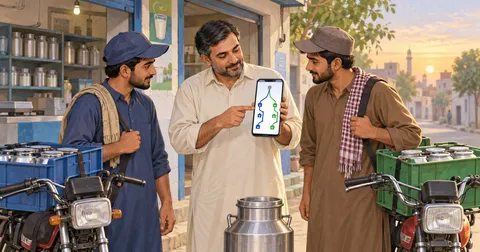
Should a milk delivery worker collect payments?
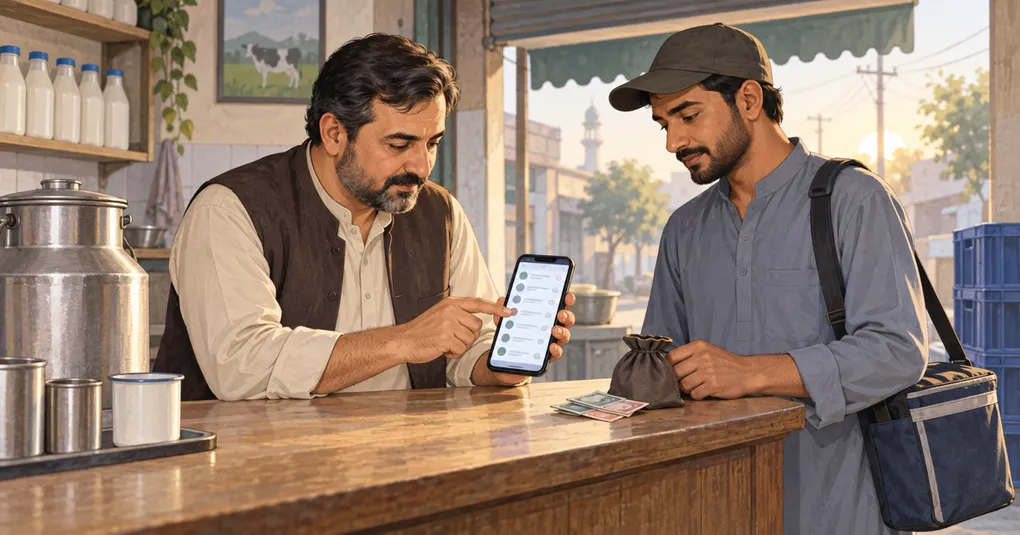
A milk delivery worker should collect customer payments only when the customer can see the exact balance, the worker has clear limits, each payment is acknowledged immediately and the money is reconciled the same day. If those controls are too much for the business to maintain, keep collection with the owner or use a transfer method controlled by the business.
Doorstep collection is convenient. It also creates an extra handover between the customer’s payment and the customer’s account. The weak point is not necessarily the worker. It is an unclear system that asks one person to deliver milk, remember balances, accept cash and explain missing entries later.
Should a milk delivery worker collect payments?
Use four questions to decide:
- Can the worker see the customer’s current bill and remaining balance?
- Is it clear whether the worker may accept cash, a part-payment or no payment at all?
- Can the customer receive an acknowledgement before the worker leaves?
- Will somebody match the collected amount to the customer records on the same day?
If any answer is no, do not make payment collection part of the round yet. A simple owner-only policy is better than a flexible policy nobody can follow.
Choose one of three collection policies
There is no single correct policy for every dairy shop. Pick one that fits the way the owner can supervise the record.
| Policy | When it works | Main trade-off |
|---|---|---|
| Owner collects | Customers pay at the shop or transfer directly to a business-controlled account | Clean responsibility, but the customer may postpone payment because the delivery worker cannot accept it |
| Worker collects | Regular customers prefer cash at the door and the round has a reliable acknowledgement and handover routine | Convenient, but every collection creates another record and money-handover step |
| Mixed policy | Cash is accepted only under stated limits while transfers go directly to the owner | Flexible, but staff and customers must know exactly which method applies |
Write the rule down. “Collect when necessary” is not a rule. It leaves the worker deciding what to accept at a dark gate during an early round.
For a mixed policy, the owner might decide that the worker can accept the full amount shown on the current bill but cannot negotiate a new discount, change the milk rate or promise that an old disputed balance will be removed. Those decisions stay with the owner.
Give the worker the exact balance—not a guess
Do not send the worker out with last month’s total copied from memory. The customer may have made a transfer, paid at the shop or received an adjustment after the bill was prepared.
Before the round, the collection record should show:
- the customer and billing month;
- the latest amount due;
- any payment already recorded;
- whether a part-payment may be accepted; and
- the approved payment methods.
The customer should have the same figure. Sending a clear bill first makes the conversation at the door much shorter. The guide to sending a milk bill on WhatsApp explains how to share a summary or detailed PDF without turning the chat into the only khata.
If a customer says, “I paid the owner yesterday,” the worker should not argue or collect the amount again. Mark it for checking and let the business verify its own bank, mobile-wallet or cash record. A message on the customer’s phone may be useful context, but it is not a substitute for the business confirming receipt.
Acknowledge the payment at the door
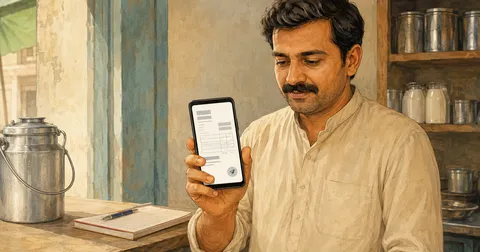
When the worker accepts money, the customer needs a simple acknowledgement before the round moves on. This could be a receipt from the business process or a message sent through the approved business channel. It should identify the customer, date, amount and whether anything remains due.
Do not ask the worker to photograph currency, customer identity documents or private payment screens. Those images create extra sensitive material without fixing the account. The useful evidence is a clear entry that both sides can relate to the same bill.
Keep “payment received” separate from “bill delivered.” Handing over a PDF or showing a balance does not mean money was collected. Likewise, a customer saying they will pay tomorrow should not close the bill today.
Reconcile the round on the same day
At the end of the round, compare three things:
- Payments acknowledged to customers.
- Money or confirmed transfers received by the business.
- Payments entered against customer accounts.
All three should describe the same events. If cash was collected, count and hand it over using the business’s normal cash procedure. If a transfer went directly to the owner, do not add it to the worker’s cash total. If a customer paid only part of the bill, record that amount and leave the remainder visible as udhar rather than marking the account paid.
Do this while the round is still fresh. Waiting until month-end turns a small mismatch into a debate involving the worker, the owner and a customer who no longer remembers the exact morning.
Handle part-payments and disputes without rewriting history
A customer may question a skipped day, a changed quantity or an earlier balance. The worker can note the issue, but should not quietly edit the amount at the gate unless the business has explicitly given that authority.
Keep the original bill and payment event visible. Then correct the underlying delivery record or add a clearly explained adjustment after the owner checks the issue. Replacing the old total in chat without updating the customer account creates two versions of the doodh hisab.
The same rule applies to part-payments. Record what was actually received. Do not enter the full bill as paid because the customer promised the rest later.
Where DairyTrack fits
DairyTrack’s milk billing workflow keeps daily deliveries, customer bills, recorded payments and outstanding balances together. Its milk delivery management workflow keeps the route order, saved location, house photo, regular quantity and delivery actions with the customer record. That gives a replacement worker the delivery information needed for the round and gives the owner one place to check the related customer balance.
DairyTrack records the payment entry made by an authorised business user. It does not receive cash, process bank or mobile-wallet transfers, confirm that money reached an account, or replace the business’s cash-handover and accounting process.
Get DairyTrack on Google Play and put the current bill, payment and remaining balance in the same customer record before assigning payment collection to the round.
Keep reading