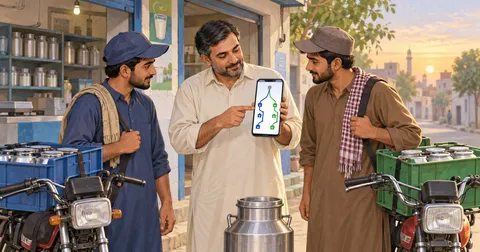
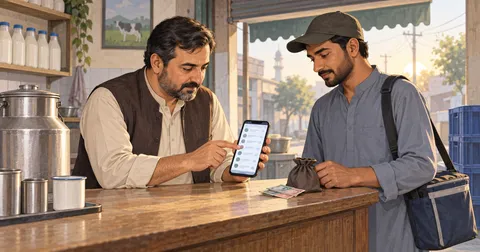
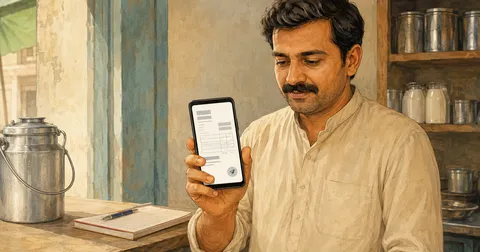
How to hand over a milk round without losing customers
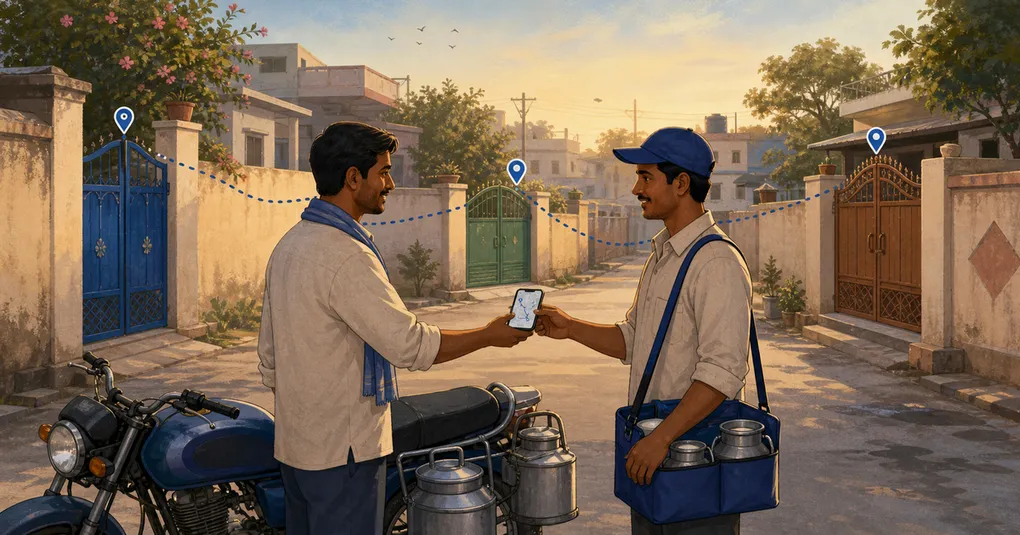
Ask most milk sellers what would happen if their delivery man didn’t turn up tomorrow, and you get the same uneasy answer: “I’d have to go myself — and even then I’d miss a few houses.”
That’s the quiet risk sitting under almost every milk round. The business doesn’t actually run on a register or an app. It runs on one person’s memory. He knows that the house with the green gate takes 1.5 litres, that the family in Lane 27 is away every Friday, and that the shop on the main road wants delivery before 6am. None of that is written anywhere.
Then he quits, falls sick, or goes to his village for two weeks — and the round breaks.
What actually disappears when he leaves
It’s rarely the customer list that’s the problem. You probably have the names and the amounts somewhere. What vanishes is everything around them:
- Which house is which. “Lane 23, Model Town” describes twenty gates. He knew the one.
- The order of the round. Which street first, which side of the road, where to turn back — the difference between 45 minutes and two hours.
- Per-customer quirks. Who takes extra on Sunday, who’s on holiday, who wants the packet left with the guard, who never answers the bell.
- Who has paid and who hasn’t. If udhar lived in his head or his pocket diary, your khata is now guesswork.
- The relationship. Customers who liked him may quietly switch to another supplier if the new person seems lost.
Lose a week of deliveries and you don’t just lose that week’s milk money — you lose customers who found someone more reliable in the meantime.
Why a list of addresses isn’t enough
Most people’s first instinct is to write down the addresses. In practice that rarely works in South Asian neighbourhoods, because addresses are often approximate:
- lanes that aren’t signposted
- houses without visible numbers
- three families in one building, only one of them your customer
- landmarks that only locals know (“behind the mosque, near the tea stall”)
A new delivery person holding a paper list still ends up phoning you from every second street. The information is technically written down, but it isn’t usable at the gate at 5:30 in the morning.
Make the round transferable, not memorised
The fix is to record the round the way a stranger would need to see it. Five things make a route genuinely hand-over-able:
- A photo of every door. This is the single biggest one. Not the address — the actual gate, shutter, or doorway. Anyone can match a photo to a house without knowing the area.
- A saved location for each customer, so directions open in one tap instead of relying on street names.
- The quantity and rate per customer, visible at the door, so the new person doesn’t have to ask (or guess) how much to leave.
- Notes and timing — early delivery, leave with the guard, skip Fridays, ring twice.
- It has to work with no signal. Basements, narrow lanes and cheap prepaid plans mean the round often runs offline. If the photos and list vanish without internet, the system fails exactly when it’s needed.
Do that, and the round stops being a person and becomes a process.
A practical handover checklist
If someone new is starting tomorrow:
- Walk the route once together if you possibly can — even one round shortens the learning curve enormously.
- Check every customer has a door photo before the handover, not after.
- Confirm the outstanding balances with each customer at month-end so nobody inherits a disputed khata.
- Tell your regulars there’s a new delivery person coming. A one-line WhatsApp message prevents most “who is this at my gate?” calls.
- Keep the old rounds visible — the new person should be able to see what was delivered last week, not start from zero.
What good looks like
You know your round is properly documented when you can hand the phone to someone who has never worked the area, and the milk still reaches the right doors that morning. No frantic calls. No skipped houses. No customer wondering whether to find another supplier.
That’s what DairyTrack’s milk delivery management workflow is built for. Every customer carries a photo of their door, their saved location, their quantity and rate, and their delivery history — and the whole round keeps working when there’s no signal, syncing once you’re back online.
Your milk business shouldn’t depend on one person’s memory. Get DairyTrack free on Google Play and get your round out of his head and into the app.
Related reading: How to keep a milk khata (doodh hisab) without a notebook.
Keep reading