Dairy farm management for small farms in Pakistan
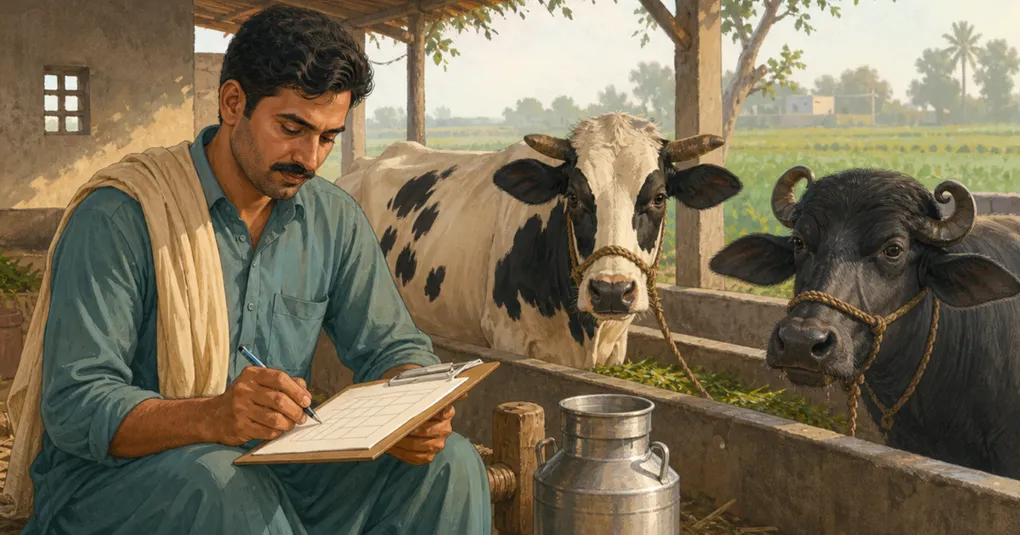
Good dairy farm management on a small farm is not a thick register or a complicated dashboard. It is a routine: identify every animal, record each milking, note feed and money when they move, write down dated animal events, and review the same records every week. A notebook can do the job. The important part is that the system gets completed every day and another person can understand it.
That sounds basic, but basic records are often the ones a farm can actually maintain through busy mornings, staff changes and weak internet. Start with a small complete system before adding more forms.
Dairy farm management starts with five records
1. Animal identity and status
Give every cow and buffalo a stable number or tag, then keep one record under that identity. Include the animal’s current stage or status and dated events such as calving, going dry, breeding or a health concern. The note is a record for follow-up, not a diagnosis.
Pakistan’s University of Veterinary and Animal Sciences includes animal identification, per-animal production and up-to-date farm records in its guidance on modern dairy farming. Without a stable identity, milk and event notes soon become difficult to connect to the right animal.
2. Milk by animal and session
Record morning and evening milk against the animal that produced it. A combined daily total tells you what left the farm; an animal-level record helps you see that animal’s own pattern.
The FAO small-scale dairy farming manual describes daily yield recording for each animal as a practical management record. When a record changes, treat it as a question to investigate. It does not tell you the cause, and it should not replace advice from a veterinarian when an animal may be unwell.
3. Feed actually given
A ration plan and the feed actually issued are not always the same. Record what was given, including wanda or another purchased feed, and note an exception when the normal plan changes. This article deliberately does not provide a feed formula: the suitable ration depends on the animal, available forage and qualified local advice.
4. Expenses and income
Record a payment when it happens and add a plain reason or category: feed purchase, labour, medicine, equipment, milk sale or another farm item. Separate farm money from household money as far as practical.
FAO’s dairy farm accounting guide explains that even simple single-entry records can show how farm money is earned and spent when they are kept daily or at least weekly. Old example prices from a manual are not useful for a current Pakistan farm, but the recording habit is.
5. Dated events and exceptions
Write down the things that otherwise disappear into memory: an animal refused feed, a worker changed a normal task, a vet visit was arranged, or a piece of equipment needed attention. Include the date, animal or area involved, and what follow-up is required. Keep clinical decisions with a qualified veterinarian.
Good dairy practice covers more than milk output. The FAO and International Dairy Federation guide also covers animal health, milking hygiene, nutrition, welfare, environmental management and working conditions. Your records should help you notice unfinished work across the farm, not push every decision toward yield alone.
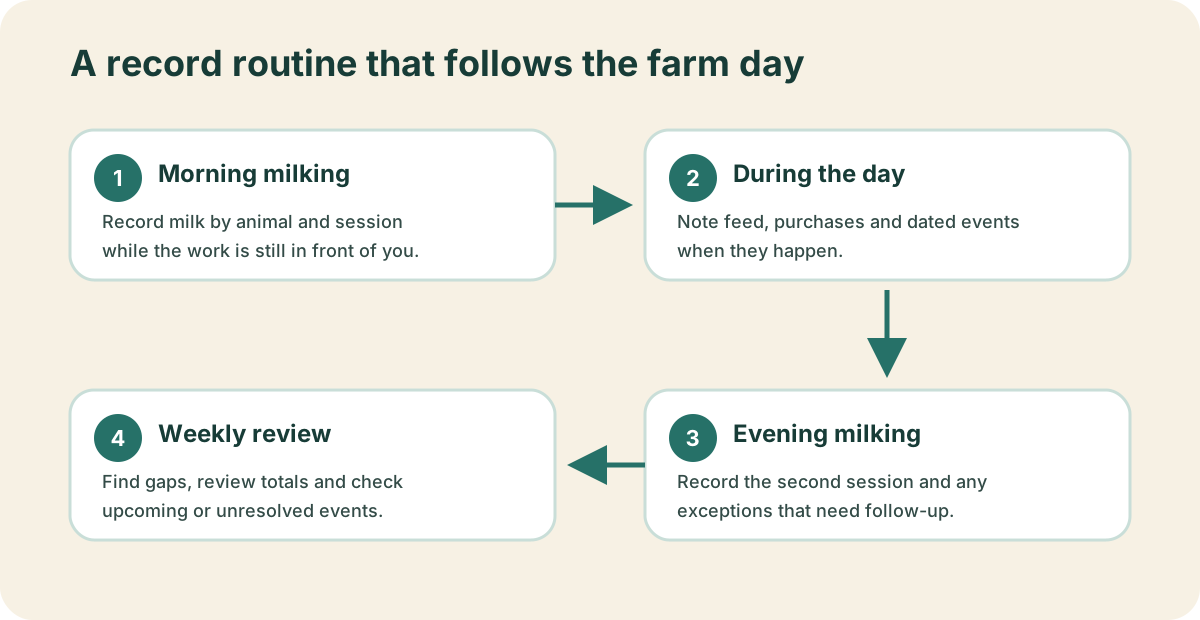
Capture each record close to the work. Use the weekly review for questions and follow-up.
Build the record into the work, not after it
A record that depends on remembering everything at night will eventually have gaps. Put the record at the point where the work happens:
- Enter milk during or immediately after each milking session.
- Note feed when it is issued and a purchase when it is paid.
- Record an animal event when it is noticed, with a clear next action if one is needed.
- Give each record one responsible person and one official place.
Consider a hypothetical day. A worker records the morning milking by animal. When a wanda delivery arrives, the person who pays records the purchase. An unusual animal event is added against that animal rather than sent only in a voice message. After evening milking, the owner checks that both sessions and the day’s exceptions are present. No one has to reconstruct the day from memory later.
Avoid parallel systems unless they serve a clear purpose. If the worker’s notebook, the owner’s phone and a wall sheet all contain different versions, the farm has three places to search and no reliable record.
Review the farm once a week
The daily routine captures facts. A weekly review turns them into useful questions.
First, look for missing entries. A blank may mean nothing happened, or it may mean somebody forgot to record it. Resolve that before comparing totals. Then:
- Compare each animal with its own recent milk record rather than a universal target.
- Review feed purchases and recorded use for unexplained gaps.
- Check expense and income categories for missing or unclear entries.
- Look at upcoming dated events and follow-ups that are still open.
- Decide who will handle each exception and when it will be checked again.
Keep the review short enough to repeat. A complete weekly check that the owner actually does is more valuable than a detailed monthly report that is always postponed.
Notebook, spreadsheet or dairy farm management software?
A notebook is inexpensive, needs no battery and can be enough when one disciplined person records and reviews everything. Its weakness appears when you need totals, history by animal, or a handover to someone who does not know the notebook’s shortcuts.
A spreadsheet makes sorting and totals easier. It can work well for a careful owner or office worker, but entering data beside the animals on a small phone can be awkward. Multiple copies can also create confusion.
Dairy farm management software earns its place when one entry can be reused in animal history, milk records and reports instead of being copied into several registers. It should reduce duplicate work, not add another record on top of the old ones. Check how it behaves with weak connectivity and how easily another authorised worker can follow the routine before depending on it.
A simple DairyTrack routine for a small farm
In the current DairyTrack Android app, the Animals area keeps the herd list and individual animal details. The Milking area records dated morning or evening entries by animal. Feed holds daily plans, quantities and exceptions, while the expenses area keeps categorized farm expenses and salary records. The Reports tab brings recorded milk information into rankings and trend views.
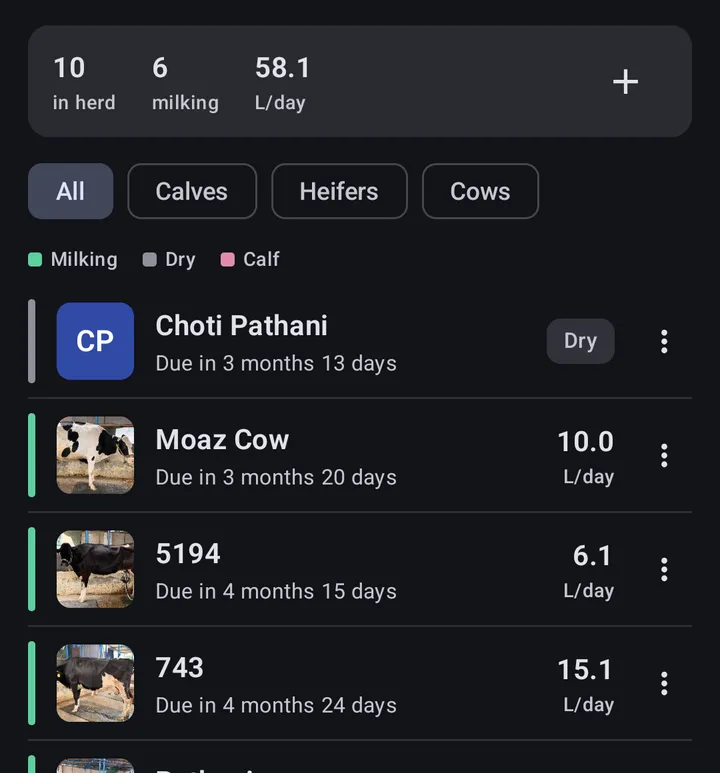
Zavi Farms herd records in DairyTrack. The farm owner authorised use of this QA screenshot; it contains no customer or personal information.
A practical routine is to set up the animals first, enter milk at each session, record the day’s feed changes and farm payments, then use Reports during the weekly review. The software does not decide why a number changed; it keeps the underlying record together so the owner can ask a better question.
DairyTrack’s animal and milking workflow is designed for weak connections: recent animal and milking views are cached, and a new milking record can wait to synchronize when connectivity returns. Feed and expense entries do not use the same queued-write path, so complete those while online rather than assuming every screen behaves identically offline.
If the farm also delivers milk directly to homes, keep customer directions and delivery knowledge out of one person’s memory too. The separate guide on handing over a milk round without losing customers covers that workflow.
Start with one complete week
Do not begin by trying to record everything the farm could possibly measure. Choose the five records above, decide who owns each one, and use one official place for seven complete days. At the end of the week, check the gaps and remove any step that only duplicates work.
Once that routine is stable, move it into a tool that makes entry and review easier. See how DairyTrack’s farm-management workflow brings animal, milk, feed, expense and report records together, then start with one complete week rather than waiting for a perfect system.
Keep reading