Why a door photo beats an address for milk delivery
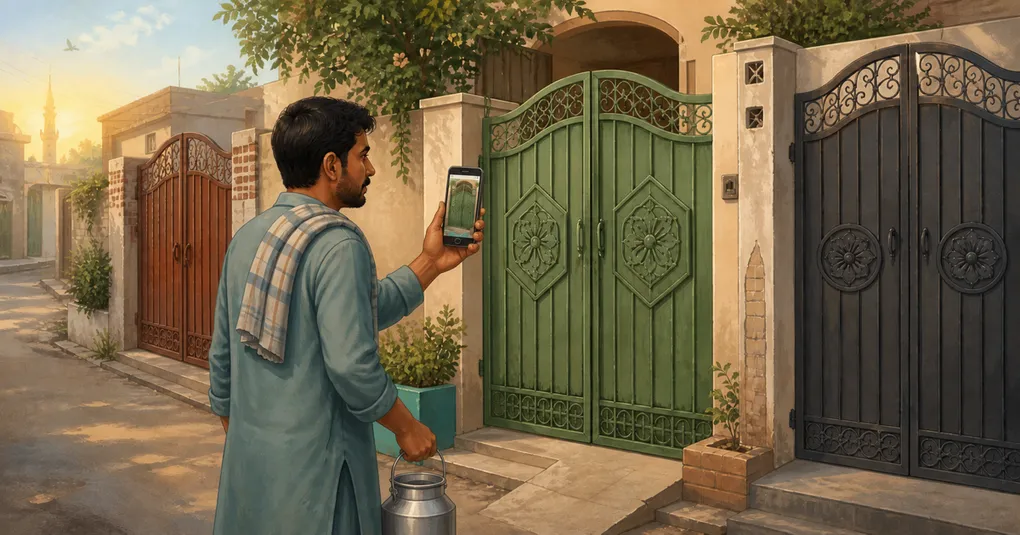
A customer address can bring a replacement milk delivery worker to the right street and still leave one awkward question: which door is it? A current photo of the gate, doorway or shopfront answers that last question quickly. It is most useful beside a saved map location, delivery note, route order and regular quantity—not as a replacement for them.
This matters when the usual delivery person is sick, on leave or has left the job. A list that made perfect sense to him may not be enough for somebody seeing the area for the first time.
An address gets you near the customer; a door photo confirms the stop
An address is still important. It gives the area, street and building information. The difficulty comes at the end of the journey.
The house number may not be visible. Two neighbouring gates may use the same colour. One building may contain several households. A shop may be recognised by its shutter rather than a formal number. A written note such as “third house after the corner” also becomes unreliable when the worker approaches from the other direction.
A photo gives the replacement something concrete to match: the shape of the gate, the wall colour, a pillar, a sign or another fixed exterior detail. It does not require the person to already know the customer’s family or the local nickname for the lane.
The useful distinction is simple:
- the saved location gets the worker to the correct point on the map;
- the photo helps confirm the final gate or storefront;
- the note explains what is not visible, such as “use the side gate”;
- the customer record supplies the quantity and contact action.
Leave one of these out and the worker may still need to call for help.
What makes a useful milk-delivery door photo
The photo should help another person recognise the stop in a few seconds. It does not need to look attractive.
Stand far enough back to show the full gate, doorway or storefront and a little of the wall around it. A close-up of one handle is difficult to match. If several houses look similar, include a fixed detail that separates the correct one: a pillar pattern, wall colour or position beside another entrance.
Take the photo in usable light. A dark image captured during the first delivery of the morning may show less than the worker can see in person. If the entrance changes after repainting or renovation, replace the old photo instead of keeping both.
Keep the frame focused on the exterior. There is usually no delivery reason to photograph a person, a private interior, a vehicle number plate or children near the gate. Tell the customer why the exterior photo is being saved and keep only what the round needs.
A photo cannot carry the whole round
The door photo solves visual identification. It does not decide how to reach the neighbourhood or what to deliver.
A replacement still needs the customer order for the round, the saved location, the regular morning or evening quantity, and any current exception. “Leave with the guard” and “customer is away on Friday” are notes, not things a gate photo can explain.
The photo also cannot tell whether a temporary road closure has changed the practical order. DairyTrack keeps the customer order chosen by the business; it does not automatically calculate the fastest driving route. The person running the round still uses judgment.
That boundary is useful. A small dairy shop does not need to pretend every route is an optimisation problem. It needs enough current information that a sensible replacement can complete the work without borrowing somebody else’s memory.
Test the record before the regular delivery person is absent
Do not wait for a sick day to discover that half the photos are missing.
Ask someone who does not normally run the route to check a few difficult stops from the saved records. They do not need to make a delivery. The test is whether the photo, location and note identify the correct exterior without a chain of phone calls.
When the record fails, fix the specific gap:
- retake a photo that is too dark or tightly cropped;
- correct a map pin that lands on the wrong side of the lane;
- replace a vague landmark with a short instruction;
- update a changed gate or shopfront;
- confirm whether two households in one building need separate notes.
This small check is more honest than assuming the round is documented because every row has something in the address field. The wider milk-round handover checklist covers balances, customer communication, delivery history and walking the route together.
Keep the photo useful without collecting more than you need
A delivery record should be useful and restrained. Save the exterior feature needed to recognise the stop. Avoid extra images that do not help the delivery.
Review the photo when a customer moves, an entrance changes or a confusing stop keeps generating calls. Remove an obsolete image rather than leaving the replacement to choose between two versions.
Access matters too. The person covering the round needs the route, but unrelated people do not. Use the business’s authorised delivery setup rather than forwarding customer photos through personal chat groups where they are harder to control or update.
How DairyTrack puts the details together
In DairyTrack’s current milk delivery management workflow, the customer row places the exterior photo beside the name and address. Directions, call and WhatsApp actions are available from the same row, along with the quantity controls for that delivery.
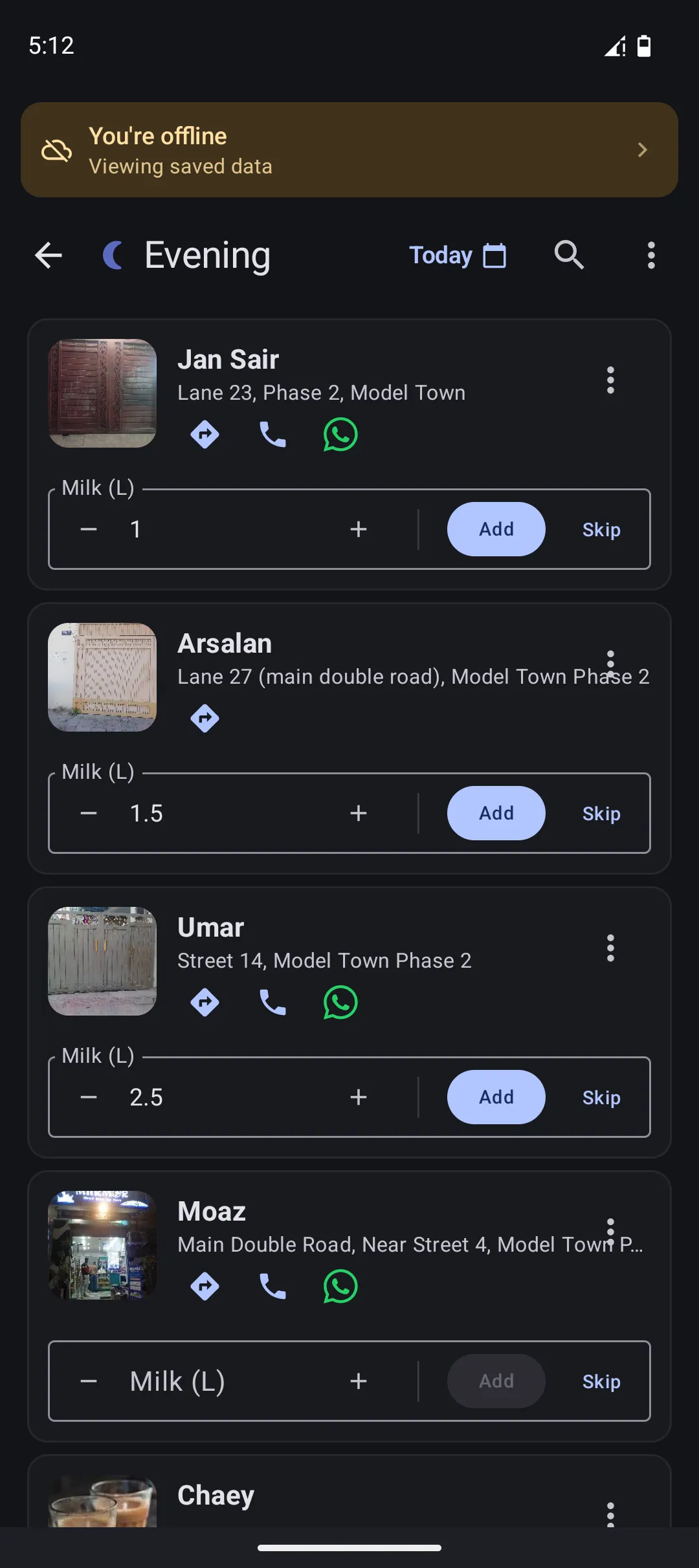
A real DairyTrack route screen showing the saved exterior photo beside the address, directions and delivery quantity.
The saved round is designed to remain available when the connection drops, and delivery changes can synchronise after connectivity returns. That helps in lanes with an unreliable signal, but it does not remove the need to check the records before the handover.
The purpose is not to put a product mention into every delivery decision. It is to keep the few details a replacement needs in one working view instead of splitting them between a register, somebody’s phone gallery and the regular worker’s memory.
Start with the ten stops most likely to cause a phone call
You do not have to rebuild the entire round in one sitting. Begin with the stops that a new person would struggle to identify: missing house numbers, shared buildings, similar gates, side entrances and shops known mainly by a landmark.
For each one, save a clear exterior photo, check the location pin, add one short note if needed and confirm the regular quantity. Then ask whether a person unfamiliar with the lane could identify the stop from that record.
Once the difficult ten are complete, continue through the rest of the route. If customer deliveries also feed into monthly accounts, connect the same working records to the milk billing workflow rather than rebuilding the month from memory.
Get DairyTrack on Google Play and save the first confusing stops before somebody else has to cover the round.
Keep reading