Milk delivery checklist for a new worker's first morning
Before a new milk-delivery worker starts, give them one current round with every stop in order, a saved location, a recognisable exterior photo, the regular quantity and a short delivery note. Then agree how they should record a change or skip and who will check unfinished stops when the round ends.
That is more useful than a long speech beside the milk cans. At the first confusing lane, the worker needs the right detail on the phone—not a memory of something the owner said half an hour earlier.
Before the worker leaves
Open the correct morning or evening round and check that it is for today’s date. If the worker may lose mobile data, open the round while connected so the saved customer list and full house pictures are ready on the phone.
Then settle four basics:
- which round this worker owns;
- where the round begins and ends;
- who answers a call when a stop is unclear; and
- who reviews missed stops, changed quantities and payments afterward.
Do not hand over two slightly different lists—one on paper and one on the phone. Pick the current record and correct it before the worker leaves.
If this is an emergency replacement because the regular delivery man is absent, the wider guide to handing over a milk round explains how to get route knowledge out of one person’s memory before the next absence.
Check every stop record
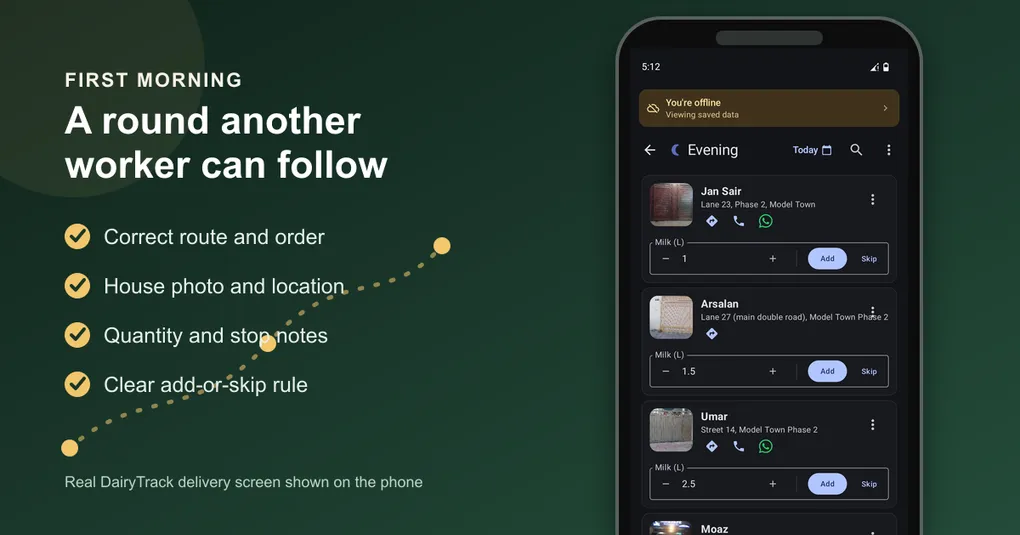
A first-morning stop record should answer five questions without a call to the owner:
- Where is the customer? Save the exact location, not only the street or mohalla.
- Which house is correct? Use a current photo of the outside gate, doorway or shopfront.
- How much normally goes there? Keep the regular product and quantity with the customer.
- What is unusual about the stop? Add only a useful note: side lane, upstairs entrance, leave with the guard or deliver before a particular part of the round.
- How can the customer be contacted? Keep the approved phone action beside the stop instead of making the worker search an old chat.
The photo should confirm the last few metres after directions get the worker into the right area. It should not show private people or the inside of a home. The door-photo guide covers how to take a useful exterior photo and when to replace it.
Rehearse the confusing houses
Do not spend the briefing equally on every customer. Concentrate on the stops that a stranger could get wrong:
- two similar gates beside each other;
- a number hidden behind a tree or sign;
- a shop reached from the service lane rather than the main road;
- two customers in one building; or
- a house where milk is left with the guard.
If possible, walk or ride the difficult part together once. A clear phone record makes the round transferable, but it does not make a half-visible gate number obvious from the road.
Ask the new worker to explain the first few stops back to you: where they will turn, which gate they expect and what quantity they will see. That quickly exposes a missing location or vague note while it can still be fixed.
Agree what happens when the morning changes
The regular list is only the starting point. A customer may ask for less milk today, say the family is away, or question yesterday’s entry. Decide the rule before the first doorstep.
The worker should know:
- whether a changed quantity is recorded immediately;
- when to mark a stop skipped rather than leave it unfinished;
- whether they may accept a payment;
- who approves a new price or recurring quantity; and
- where a customer request is recorded for the owner.
A delivery worker should not quietly edit a regular arrangement because of one hurried conversation at the gate. Record what actually happened today, then let the owner confirm any permanent change.
Record the real delivery at the gate
The entry should match what was left, not what the list expected. Add the actual quantity, adjust it when the customer takes something different, or mark the stop skipped when nothing was delivered.
Do this at the gate. If the worker waits until the end of the round, similar names and quantities become easy to mix up. A paper tick that only means “I visited this street” is not enough for the bill later.
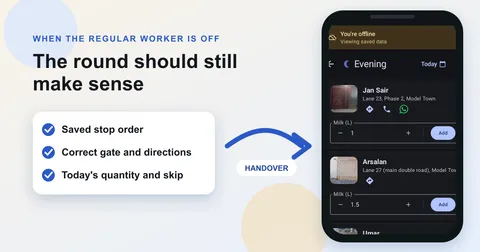
When the phone is offline, the worker can continue with the saved round and queue delivery changes for synchronization when the connection returns. They should still check that the correct route and pictures were loaded before leaving coverage.
Review the first round the same morning
When the worker returns, review the round while the difficult stops are still fresh. Check:
- which customers remain unfinished;
- which deliveries used a different quantity;
- which stops were skipped and why;
- whether any location, photo or note was wrong; and
- whether the worker received money or a request that needs the owner’s action.
Fix the customer record, not only today’s explanation. Otherwise the same call happens when another person covers the round next week.
The first round may reveal that the chosen order crosses the same main road twice or puts an early customer too late. Change the order deliberately. Do not assume the app will find a faster route on its own.
What DairyTrack can and cannot do
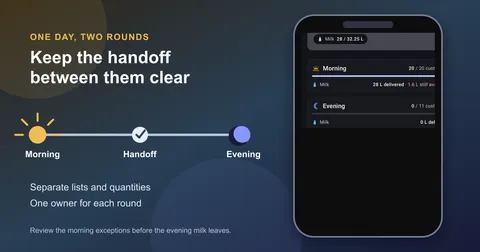
In DairyTrack’s milk delivery management workflow, the business chooses the route and customer order. The worker can see each customer’s saved exterior photo, location, contact actions and regular quantity together, then add the actual delivery or mark it skipped. Morning and evening work stays separate, and recorded deliveries remain available for billing.
DairyTrack does not calculate the fastest route, assign a worker automatically or track that worker live. It keeps the round and stop details the owner has prepared available to the person holding the phone—including saved route data when the signal drops.
Get DairyTrack on Google Play and open one current round with the replacement before the first stop.
Keep reading